Why Early Social Skills Matter
Social skills developed in early childhood influence how children communicate, cooperate, and build relationships later in life. Experts emphasize that the environment where children spend their early years plays a significant role in shaping emotional awareness and interpersonal behavior.
Benefits of Small Group Daycare Settings
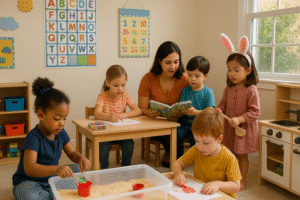
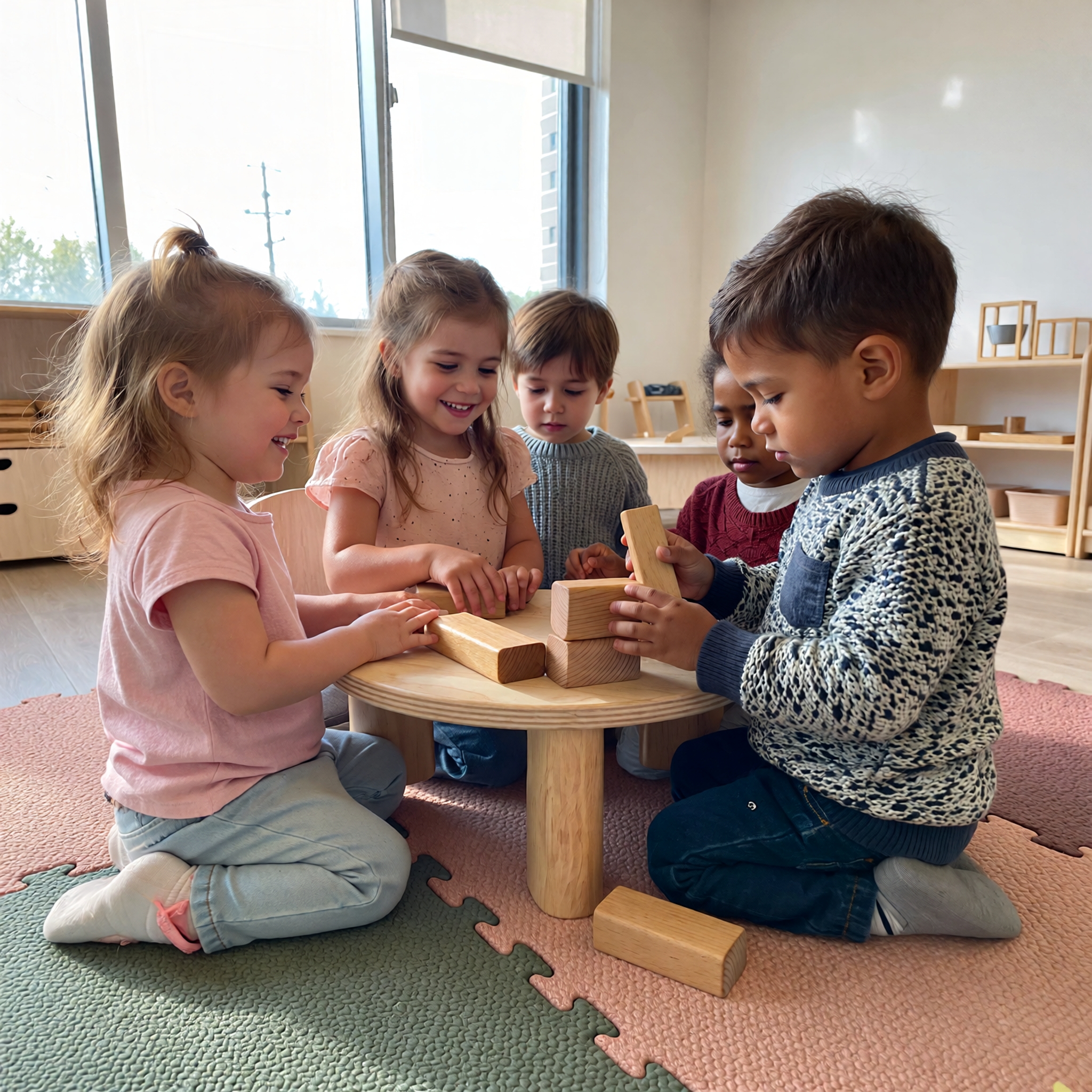
Small group daycare environments allow children to interact in a calm, manageable setting. With fewer peers, children are less likely to feel overwhelmed and more likely to engage meaningfully. Skills such as sharing, turn-taking, listening, and expressing emotions develop naturally through daily interaction.
Role of Caregivers in Guided Social Learning
In smaller groups, caregivers can closely observe each child’s behavior and provide immediate guidance when social challenges arise. Conflicts become learning opportunities, helping children understand empathy, patience, and respectful communication.
Why Potomac Families Prefer Small Group Care
For families in Potomac, MD, home daycares offering small group care provide a balanced alternative to larger centers. Children receive consistent attention while learning how to interact positively with others in a familiar and secure environment.
How Right at Home Daycare Encourages Interaction
At Right at Home Daycare, social learning is part of everyday routines. Group play, structured activities, and guided interaction help children build confidence while learning to respect personal boundaries and communicate effectively.
Building Confidence Through Meaningful Connections
Rather than forcing socialization, small group daycare allows children to develop relationships at their own pace. This steady approach helps children feel secure, confident, and prepared for future school environments.
Related posts: