
When parents evaluate childcare choices, they are often caught between two vastly different operational frameworks: large, multi-classroom commercial centers and intimate, home-based family care. Commercial institutions frequently highlight sprawling amenities, dedicated outdoor facilities, and rigid age-segregated rooms. However, beneath the polished infrastructure lies an operational dynamic defined by higher total room capacities, rotating staff shifts, and frequent handoffs.
For families in Potomac, MD, choosing the right fit requires looking past physical scale to examine the structural indicators of quality. According to early childhood framework guidelines established by the National Association for the Education of Young Children (NAEYC) and the American Academy of Pediatrics (AAP), a child’s early developmental trajectory is far more dependent on caregiver consistency, low sensory stress, and meaningful adult interaction than on facility size alone.
Below is an analytical evaluation comparing home-based childcare and commercial centers to help determine which setting best aligns with your child’s temperament.
Environment Comparison: Home Care vs. Commercial Center
1. Acoustic Overload and Stress Regulation
A critical yet under-discussed difference between home settings and commercial facilities is the acoustic environment. Commercial centers feature high ceilings, hard surface flooring, and dozens of voices resonating within enclosed spaces, creating a baseline level of ambient noise that persists throughout the day.
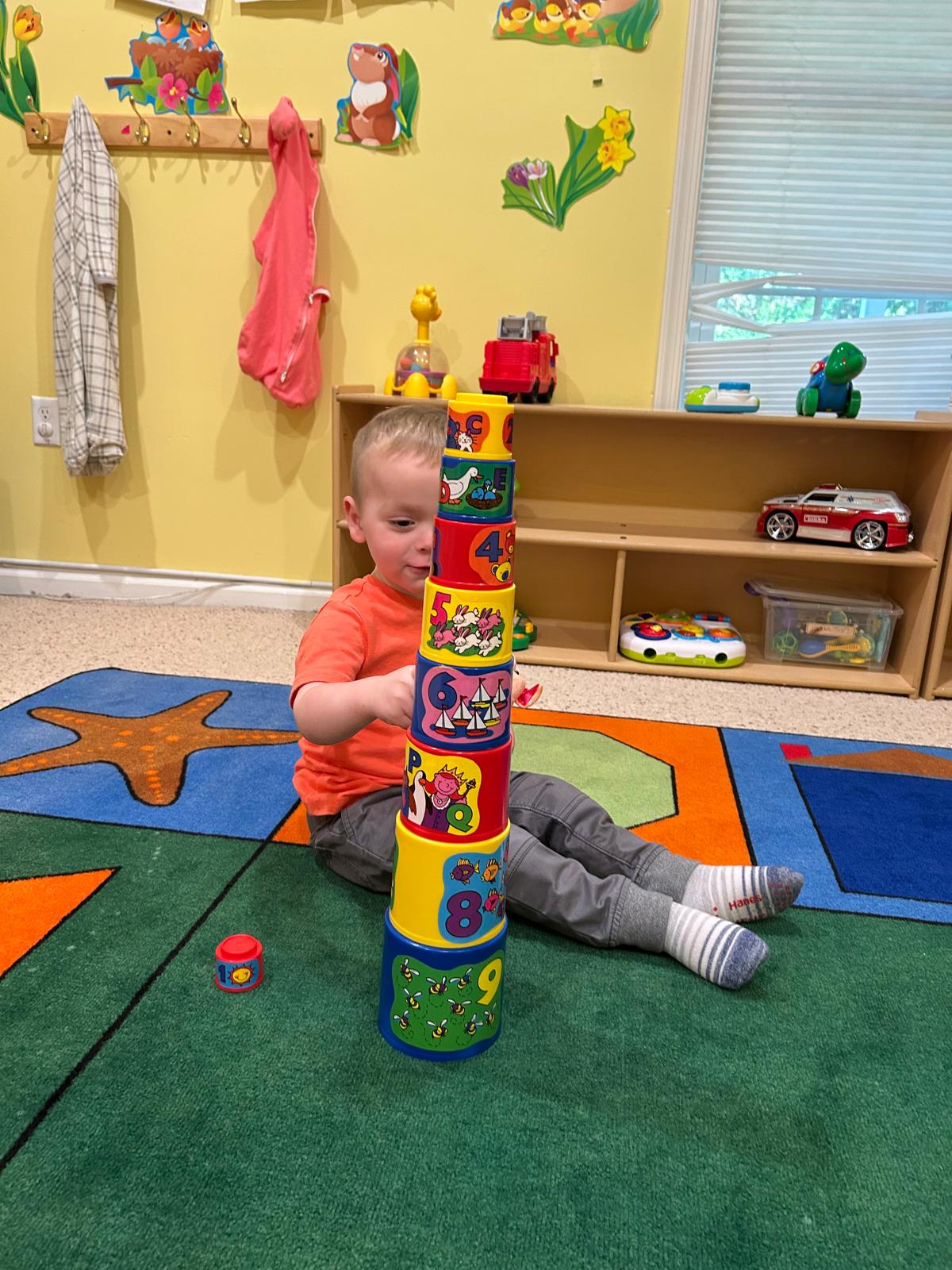
In a specialized toddler home daycare, the physical space mirrors a calm family residence. The American Academy of Pediatrics (AAP) notes that excessive ambient noise can elevate stress hormone production in infants and toddlers, leading to behavioral fatigue and difficulty focusing. The softer acoustic profile of a residential setting allows young children to engage in prolonged, deep play without suffering from sensory burnout.
2. Primary Caregiving and Secure Attachment
Infants and young toddlers thrive on relational predictability. In large commercial operations, opening teachers, midday shift covers, afternoon floaters, and closing staff mean a child may be handed off between three to five adults in a single 8-hour window.
By contrast, a licensed infant child care home program offers unbroken relational continuity. A child greets the exact same primary caregiver every morning and says goodbye to them every evening. As emphasized in developmental research by the Centers for Disease Control and Prevention (CDC), this consistent one-on-one bond fosters a secure baseline attachment, allowing toddlers to build emotional self-regulation and social confidence at an accelerated pace.
3. Mixed-Age Socialization vs. Single-Age Isolation
Commercial facilities separate children strictly by age brackets (e.g., 12–18 months, 18–24 months). While this streamlines curriculum delivery, it removes the organic social dynamics found in natural family structures.
In a small-group childcare home, mixed-age play allows younger infants to learn by observing older peers, while older toddlers develop empathy, patience, and leadership skills as they model behavior for little ones. Guidance from the Maryland State Department of Education (MSDE) Division of Early Childhood highlights that small mixed-age environments foster prosocial behaviors and reduce competitive peer aggression.
The Low-Ratio Advantage in Potomac
Selecting childcare is not a vote for the biggest building; it is an investment in the exact environment where your child’s emotional and cognitive needs are fully understood every day.
For parents exploring childcare options across Montgomery County, deciding between a commercial center and a home daycare comes down to your child’s individual needs. While large facilities suit children who thrive in high-energy, structured institutional spaces, home environments offer unmatched individual focus, low illness rates, and deep emotional security.
Right at Home Daycare Bridges this choice effortlessly. Operating as an elite licensed home program in Potomac, MD, Right at Home Daycare pairs research-backed early education standards with the warmth, safety, and continuous attention of a dedicated low-ratio home.
Related posts:
Top 5 Home Daycare Potomac MD Ranking
How to Choose the Best Daycare in Potomac, MD
The First Day of Daycare: How to Prepare Your Child (and Yourself)