
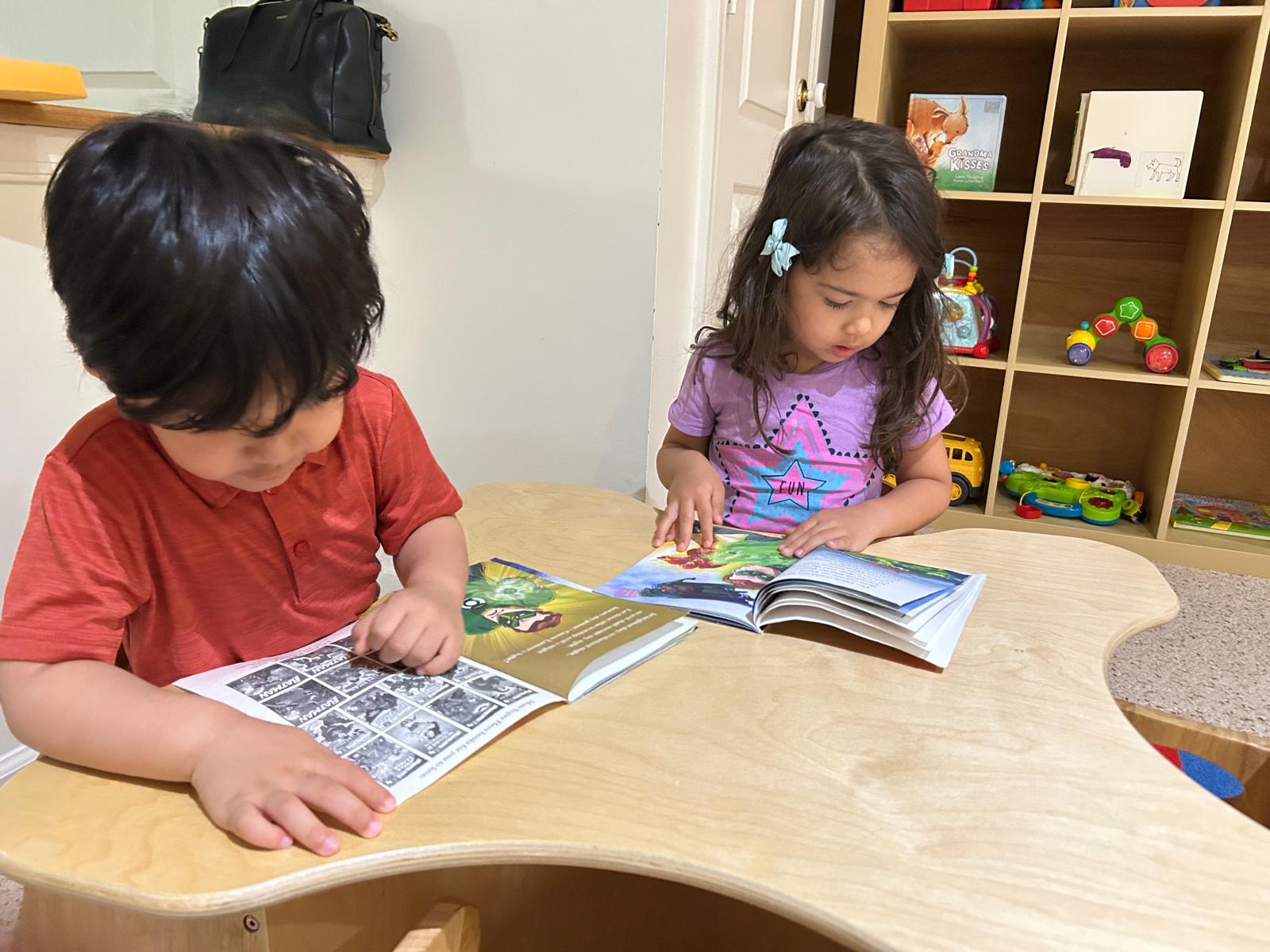
In many standard childcare environments, “storytime” is treated as an isolated event, a brief window where a caregiver holds up a book while a room of toddlers is expected to sit passively. However, modern neurological research reveals that for children under three, brain development does not happen in a vacuum of quiet observation. It happens through active, tactile immersion.
To truly cultivate young minds, elite early childhood programs look to specialized reading programs that develop early literacy skills. Yet, the secret that bridges the gap between a toddler’s tracking eyes and a future fluent reader is surprisingly physical: it is sensory play.
How Sensory Play Sparks Early Literacy
For discerning families in Potomac, MD, providing an environment that stimulates both the tactile senses and pre-reading capabilities is essential. Below is an analytical look at how high-impact sensory activities lay the groundwork for lifelong literacy.
1. Vocabulary Bins: Turning Textures into Language
A toddler cannot easily comprehend abstract adjectives without a physical context. Simply reading the word “rough” or “smooth” in a book carries little cognitive weight.
By introducing texture-focused sensory bins, filled with materials like smooth river stones, coarse dried beans, or soft felt strips, a high-quality toddler home daycare turns abstract text into reality. As a child sifts through the bin, a skilled educator narrates the experience in real time. This immediate loop of touching an object while hearing its linguistic label is a core pillar of infant child care language development, dramatically accelerating word retention well before formal reading begins.
2. Sensory Letter Tracing: Building Muscle Memory for Print
Long before a child picks up a pencil to write, they must develop print awareness, the understanding that specific shapes represent distinct sounds. Traditional workbooks are fundamentally inappropriate for the under-three age group, whose fine motor control is still forming.
Instead, progressive group childcare environments utilize mess-free “squish bags” (gallon bags filled with clear hair gel and non-toxic glitter) or shallow trays of soft sand. Toddlers use their fingers to trace lines, curves, and basic letter paths. This tactile feedback creates strong neural pathways for shape recognition, allowing children to absorb the geometry of the alphabet through touch and sight simultaneously.
3. Auditory Shakers: The Foundation of Phonological Awareness
True literacy begins with the ear, not the eye. To successfully participate in reading programs that develop early literacy skills, an infant or toddler must first learn to isolate and distinguish between different sounds, a skill known as phonological awareness.
An exceptional sensory activity involves creating paired sound shakers using safe, sealed containers filled with various items like rice, wooden beads, or bells. Toddlers shake, listen, and match identical sounds. This playful auditory discrimination directly trains the brain to notice the subtle phonetic differences inside spoken language, making it significantly easier for them to decode phonics and rhyming patterns later in life.
The Premium Home Daycare Advantage in Potomac
A common educational pitfall is treating sensory play as mere entertainment and reading as mere academics. In elite early care, the two are entirely intertwined.
The first three years of life represent an unprecedented window of brain elasticity. For families navigating the highly competitive academic landscape of Potomac, MD, a child’s earliest care experiences must be deliberate, enriching, and deeply engaging.
Right at Home Daycare flawlessly unifies these concepts. Operating as a premier, licensed home program, Right at Home Daycare blends the cozy comfort of a low-ratio home with an intentional, research-backed curriculum. Through daily, custom-designed sensory experiences and rich pre-literacy exposure, we ensure your child transitions seamlessly from curious toddler to confident, lifelong learner.
Related posts:
Top 5 Home Daycare Potomac MD Ranking
How to Choose the Best Daycare in Potomac, MD
The First Day of Daycare: How to Prepare Your Child (and Yourself)